
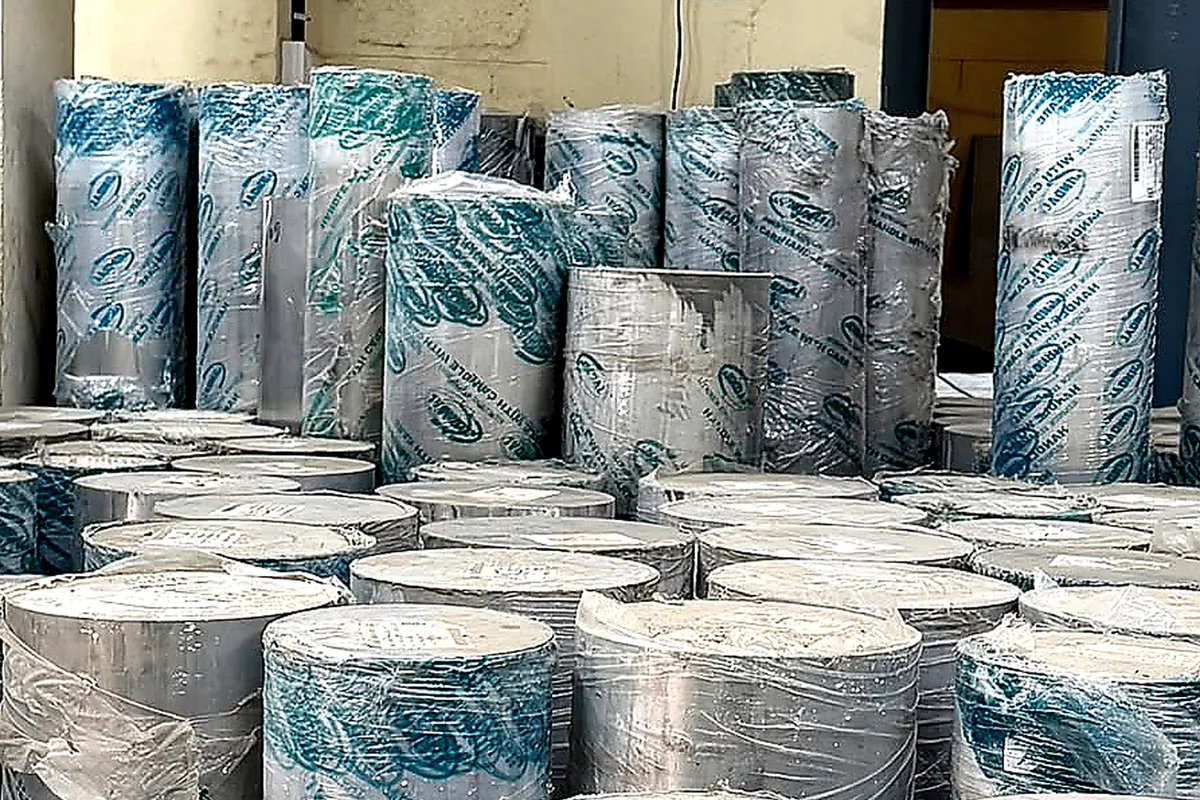
Grade reference
1100 aluminium — commercially pure and highly formable.
At least 99 % aluminium. The softest and most workable of the common grades, with the highest conductivity and the lowest strength.
- Alloy system
- 1000 series — commercially pure
- Heat treatable
- No — work hardened
- Purity
- 99.0 % aluminium minimum
- Forms we hold
- Sheet, coil, foil
What 1100 is
Outstanding formability and corrosion resistance, high thermal and electrical conductivity, low strength.
Properties in practice
- Formability. Outstanding — deep draws and spins where other grades split
- Corrosion resistance. Excellent, including many chemical environments
- Conductivity. High thermal and electrical conductivity
- Weldability. Excellent by all common methods
- Strength. Low — not a structural choice
- Machinability. Poor; too soft for clean turning
Where it is used
- Deep-drawn and spun components, cookware and lighting reflectors
- Fin stock and heat exchanger strip
- Chemical and food processing equipment
- Decorative trim, nameplates and interior panels
- Foil, insulation jacketing and packaging
- Electrical busbar and conductor applications
Nominal composition
Aluminium 99.0 % minimum · Copper 0.05 – 0.20 % · Silicon + iron 0.95 % max combined · Manganese 0.05 % max
Figures on this page are indicative typical values for comparison only. The mill test certificate supplied with your consignment is the governing document.
Tempers
1100 tempers and typical properties.
Indicative values for comparing tempers. Figures move with product form and thickness, and the mill test certificate governs.
| Temper | Tensile, MPa | Yield, MPa | Elongation, % | Condition and usual use |
|---|---|---|---|---|
1100-H14 | ~124 | ~117 | ~9 | Strain hardened, half hard. The common condition for flat sheet work. |
1100-H18 | ~165 | ~152 | ~5 | Fully hard. Stiffer, with much less remaining ductility. |
1100-O | ~90 | ~34 | ~35 | Annealed. For deep drawing, spinning and severe forming. |
Figures on this page are indicative typical values for comparison only. The mill test certificate supplied with your consignment is the governing document.
Forms
How we supply 1100.
Cut to size, cut to length or slit to width before dispatch, so the first operation on your floor is the one that adds value.
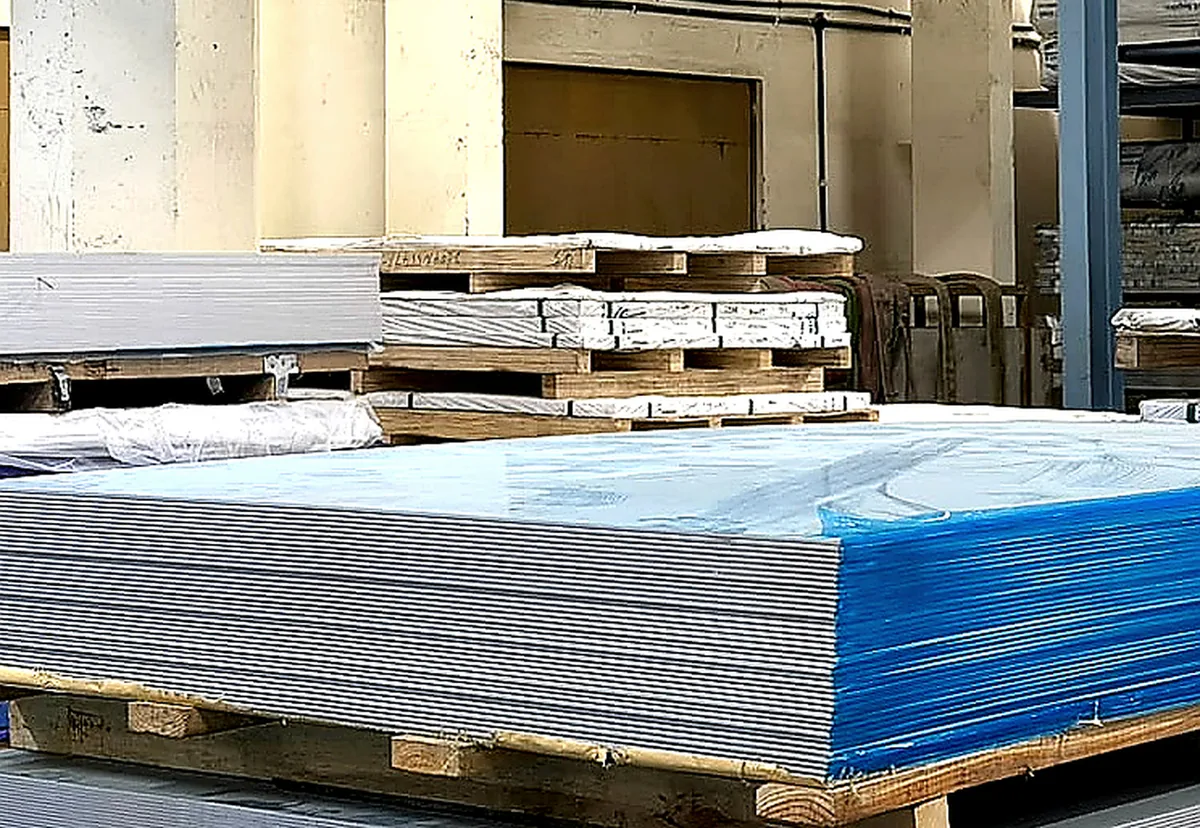 Available as
Sheets
Thin-gauge sheet for panels, enclosures and general sheet-metal work.
View detailsAvailable asFlat rolls
Flat rolled coil for roofing, cladding, ducting, composite panel and downstream forming.
View detailsComparing grades?
Before you order
1100: what buyers ask.
Grade questions are the ones worth asking before the order, not after.
How pure is 1100 aluminium?
At least 99.0 % aluminium, with copper added in small amounts and the usual silicon and iron limits. That purity is what gives it the formability, conductivity and corrosion resistance, and also why its strength is low.
Is 1100 strong enough for structural parts?
No. If the part carries load, use 6061, or 5052 where it also has to be formed. 1100 is chosen for forming, conductivity and corrosion resistance, not for strength.
Which temper for deep drawing?
O, annealed, for the most severe forming; H14 for general flat sheet work that is only lightly bent. Tell us the draw depth or bend radius and we will recommend one.
Do you supply 1100 as foil?
Yes, alongside sheet and coil. Below about 0.2 mm we quote it as foil rather than as flat rolled coil.